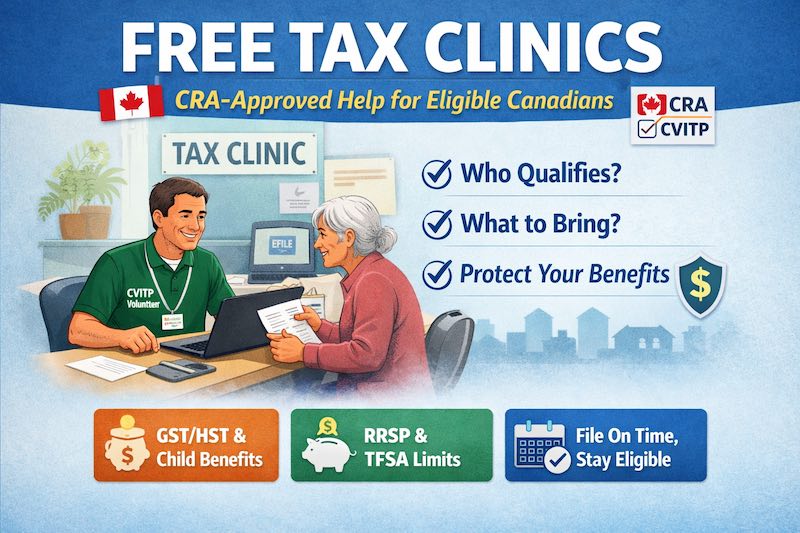
Thousands of eligible Canadians miss out on government benefits each year simply because they do not file a tax return. For low- and modest-income individuals, filing is not just about compliance — it is the gateway to credits, quarterly payments, and income-tested programs. The Community Volunteer Income Tax Program (CVITP) offers a free, CRA-approved solution. Trained volunteers use certified software to prepare and EFILE simple tax returns at no cost. For eligible taxpayers, these clinics provide safe, accurate, and timely access to the benefits they are entitled to.
What Is the CVITP? The Community Volunteer Income Tax Program (CVITP) is a partnership between the Canada Revenue Agency (CRA) and community organizations across Canada.
Participating charities, libraries, seniors’ centres, newcomer settlement agencies, and community groups host free clinics staffed by trained volunteers. These volunteers:
Prepare simple tax returns Use CRA-approved software EFILE returns directly with the CRA (where eligible)
The program is designed to remove financial and accessibility barriers to filing.
Why CRA Approval Matters Not all free help is equal.
CRA-approved clinics :
Use screened volunteers Operate with CRA-integrated EFILE systems Follow privacy safeguards Adhere to program standards
Using an approved clinic reduces error risk, protects personal information, and often speeds up refunds.
Always verify clinic legitimacy through the official CRA CVITP listing on Canada.ca.
Who Qualifies for a Free Tax Clinic? Eligibility depends on income level and return complexity . Exact thresholds may vary slightly by host organization.
General Income Benchmarks (Guidance Only)
Individual : approximately $35,000 or lessCouple : approximately $45,000 or lessOne adult with one child : approximately $37,500 or lessEach additional dependent : add roughly $2,500Interest income : usually under $1,000
These are general guidelines only. Confirm eligibility directly with the clinic before attending.
What Volunteers Typically Handle CVITP clinics are designed for simple tax situations , including:
Employment income (T4 slips) Pensions (CPP, OAS, T4A-P) Employment Insurance and social assistance Scholarships and support payments Basic investment income (T5) within program limits
Situations Usually Not Eligible You will typically need a paid preparer or CPA if your return includes:
Business or self-employment income Rental income and capital cost allowance (CCA) Complex capital gains Multiple provincial/territorial adjustments Advanced tax planning requirements
When in doubt, call the clinic ahead of time.
Why Filing Is Financially Critical — Even at Low Income Many Canadians assume that if they earned little or no income, filing is unnecessary. That is incorrect.
The Canadian tax system is the delivery mechanism for federal and provincial benefits. Without filing, payments may stop.
Benefits and Credits Tied to Filing
GST/HST credit Canada Carbon Rebate Canada Child Benefit (CCB) Provincial income-tested benefits Disability-related credits (where applicable)
Even at $0 income, filing preserves eligibility and ensures benefit continuity.
It also confirms:
RRSP deduction limits TFSA contribution room Carry-forward credits
Filing is foundational to long-term financial planning.
How to Find a Free Income Tax Clinic Near You Follow these steps:
Visit the official CRA CVITP page on Canada.ca. Use the clinic search tool to filter by city, postal code, date, and language. Check host organization websites for booking details — some offer appointments; others accept drop-offs. Call ahead to confirm eligibility and document requirements. Newcomers should check local settlement agencies, which often offer multilingual volunteers.
Always rely on the official CRA directory to confirm approval.
What to Bring to Your Appointment Arriving prepared ensures faster processing and fewer delays.
Bring:
Government-issued photo ID Social Insurance Number (SIN) documentation for you, your spouse, and dependents All income slips (T4, T4A, T5, T3, T5007, etc.) Tuition slip (T2202), if applicable Receipts for medical expenses, childcare, charitable donations, and rent (if provincially recognized) RRSP contribution receipts Information on support payments paid or received Your previous year’s Notice of Assessment (NOA) Direct deposit information (void cheque or banking form)
Organize documents in one folder to streamline intake.
What to Expect at the Clinic Intake: Staff confirm eligibility and collect documentation. Preparation: A trained volunteer prepares your return using CRA-approved software. Review: You review the draft return and ask questions. Submission: If EFILE is available and you consent, the return is filed electronically.
EFILE generally results in faster processing than paper filing.
Accessibility, Privacy & Security CRA-approved clinics require volunteer screening and operate under privacy safeguards.
Important precautions:
Never share CRA My Account passwords. Confirm the clinic is listed on the official CRA site. Ask about language services or accessibility accommodations when booking.
Protecting personal information is essential.
If You Don’t Qualify — Alternative Options If your return is too complex, consider:
Community college or university accounting clinics (often low cost) Licensed tax preparers or CPAs (request written fee estimates) NETFILE-certified software providers (some offer free tiers based on income) Filing independently through CRA My Account, if comfortable
Choose the option that matches your return complexity.
Practical Tips for a Smooth Experience
Confirm appointment requirements in advance. Arrive early with organized documents. Bring direct deposit information if expecting a refund. Keep a copy of your filed return and Notice of Assessment. Verify spouse and dependent details to avoid benefit disruptions.
Preparation reduces processing delays.
Frequently Asked Questions Are CVITP clinics truly free? Yes. CRA-approved clinics provide services at no charge for eligible individuals.
How long will my refund take? EFILE returns are typically processed within a few weeks, though timelines vary depending on CRA workload.
Can volunteers provide tax planning advice? Volunteers can explain your return and common credits but do not offer in-depth tax planning or represent clients in disputes.
Are multilingual services available? Many clinics offer services in French and other languages, especially those serving newcomer communities.
Conclusion — Filing Is Not Optional for Benefit Access For eligible Canadians, CVITP clinics provide a secure and cost-free path to filing. More importantly, filing protects access to income-tested benefits, credits, and future tax room calculations.
Use the official CRA clinic search to verify eligibility, prepare your documents carefully, and ask questions during your appointment. A simple annual filing can unlock thousands of dollars in benefits and preserve long-term financial stability.
Disclaimer: Eligibility thresholds and program details may change. Always confirm current information directly with the CRA or the host organization before attending a clinic.